

A Clear Process, Exceptional Results
Our custom home building process in North Vancouver, stage by stage, with the timelines we actually see on North Shore projects. No surprises, because you know what is coming next.
01. Consultation
We sit down with your vision, your lot and your budget, and tell you early whether the three line up. If they do not, better to know now.
02. Feasibility and Early Estimate
We review site conditions, zoning and what your lot will actually allow, then put a first number against it. This is where most surprises get caught.
03. Design
Our design team develops the drawings, usually across several rounds as the design and the budget move toward each other.
04. Permits and Approvals
We submit and manage the application, coordinating engineers and consultants. A development permit, a sloped lot or an environmental review adds time.
05. Materials and Final Pricing
Finishes, fixtures, lighting and flooring get locked in. Deciding now instead of mid build is the single biggest thing you can do to protect your schedule.
06. Construction
Trades, suppliers and site coordination. Excavation, foundation, framing, envelope, mechanical, finishes, with inspections at each municipal hold point.
07. Progress Reporting
Regular updates on progress, upcoming milestones and any decision waiting on you. You should never have to ask how it is going.
08. Handover and Warranty
Final walkthrough, deficiency list, occupancy, and the documentation that comes with your 2-5-10 warranty.
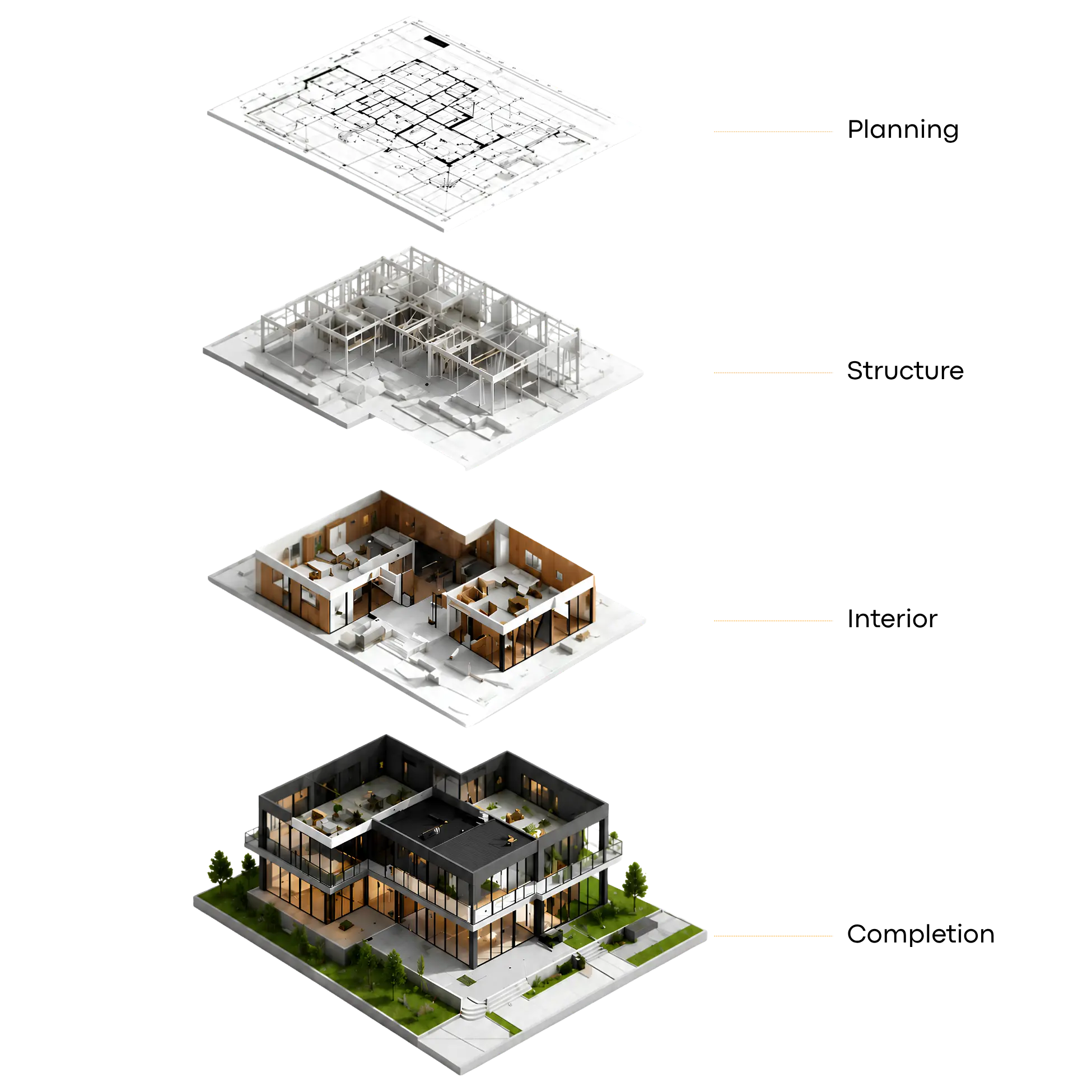
How Long It Actually Takes
Most North Shore custom homes run 18 to 30 months from the first meeting to handover. Roughly a third of that is design and permits, before a single shovel goes in the ground.
Some stages overlap. We start procurement while permits are in review, and long lead items like windows and custom cabinetry get ordered early. That is usually where months are won or lost.
Permits on the North Shore
The City of North Vancouver and the District of North Vancouver run separate permit processes with different review times and different requirements. West Vancouver is a third set of rules again.
On top of the building permit, many North Shore lots need a development permit first. Sloped sites usually need geotechnical reports, and properties in wildfire or creek protection areas carry extra review. Every new home also has to meet the BC Energy Step Code, which means energy modelling before submission, not after.
We prepare and submit the full package in one pass, because every incomplete resubmission restarts the review clock.
What Keeps a Project on Schedule
Decisions Made Early
Selections locked before construction starts, so trades are never waiting on a choice.
One Pass Permitting
A complete submission the first time, because resubmissions restart the municipal review clock.
Long Lead Items Ordered First
Windows, cabinetry and specialty fixtures ordered during permit review, not after framing.
Change Orders in Writing
Every change priced and approved before the work happens, so the budget never drifts quietly.
Explore Each Stage in Detail
01. Consultation & Pre-Construction
We meet at your property, or over the drawings if you already have them. We look at the lot, the zoning, what you want to build and what you have to spend, then tell you early whether those three line up.
You leave this stage with a straight answer on whether the project is viable, a rough cost direction, and a picture of what the first six months look like. If you have not bought the lot yet, this is the cheapest possible moment to call us.
02. Estimation
Our team prepares an early estimate from the project scope, site conditions, design direction and construction requirements. It is not a guess and it is not a final number. It is a working range with the assumptions written next to it, so you can see exactly what would move it.
Site conditions drive this number more than most people expect. A sloped lot, poor soil, difficult access or an existing foundation to remove can shift the total significantly before a single finish is chosen. Finishes come later and they move the number far less than the ground does.
03. Planning & Budgeting
Nexvan organizes the project roadmap, construction priorities, timelines, consultant coordination and budgeting structure. Drawings develop and the budget develops alongside them, usually across several rounds as the two move toward each other.
Several rounds is normal, and it is far cheaper than finding the gap after permit submission. This is also where we confirm which consultants your site actually needs, whether that is geotechnical, structural, energy modelling, an arborist report or a new survey. Each one has its own lead time, and booking them late is one of the most common reasons a permit slips.
04. Permits & Approvals
Nexvan manages the permit and approval process on your behalf, coordinating with municipal departments, consultants, engineers and any other professionals the application requires. We hold the file, so you are not the one chasing departments for status.
Sequence matters here more than speed. Where a development permit is required, it has to be resolved before the building permit is issued, so the two cannot be run in parallel. We use that window to start procurement rather than sit still, which is how the calendar stays useful while the file is in review.
05. Design Details & Materials
We organize the design details and material selections with you, room by room. Finishes, fixtures, appliances, lighting, flooring, tile, cabinetry and hardware, each with pricing attached so nothing is decided blind.
This is the one stage where the schedule is genuinely in your hands. Windows and custom cabinetry carry the longest lead times on a build, and they get ordered from these decisions. Selections locked here mean trades are never standing on site waiting for a choice, which is where most avoidable delay comes from.
06. Procurement, Trades & Construction
With permits, plans and materials in place, Nexvan coordinates trusted trades, suppliers, subcontractors and the construction schedule. Our team manages site activities, trade allocation, workmanship, safety and day to day coordination.
The sequence runs excavation, foundation, framing, building envelope, mechanical and electrical rough-in, insulation, drywall, then finishes. Municipal inspections sit at fixed hold points along that line, and work cannot proceed past one until it passes. That is why sequencing matters more than pace on a residential build.
07. Reporting
Throughout construction you receive regular updates on progress, upcoming milestones, scheduling changes and any decision sitting with you. Photos, position against the schedule, and budget against actual.
Change orders are priced and approved by you in writing before the work happens, never after. You should never have to ask how it is going, and you should never see a cost on an invoice that you did not agree to first.
08. Handover & Warranty
Before completion we conduct a detailed final walkthrough with you, reviewing workmanship, finishes and specifications, and we record every outstanding item on a written deficiency list. Each one is corrected before you take the keys.
At handover you receive occupancy documentation, appliance and system warranties, and maintenance guidance for the home. Your 2-5-10 coverage begins at first occupancy or transfer of title, whichever comes first. Two years on materials and labour, five on the building envelope, ten on the structure.
See the Process Behind the Build
Watch how the planning, the team and the day to day coordination come together on an actual North Shore build.
- Organized planning and experienced project management
- Clear communication at every stage
- Quality-focused execution from start to finish
Why a Structured Construction Process Matters
Most projects do not go wrong at the build stage. They go wrong earlier, when a budget was set before anyone understood the site, or a permit went in incomplete, or a selection was left open until the trades were already standing there.
A structured process is not paperwork. It is a set of decisions made in the right order, so the expensive ones happen while they are still cheap to change. That is the whole reason we work in eight defined stages instead of figuring it out as we go.
